
Tian Yu: Careers Beyond Academia
Updated: Apr 30

Tian Yu LinkedIn: https://www.linkedin.com/in/tian-yu/
Careers Beyond Academia
Written by: Tina Nguyen, CSULB Biotechnology Club
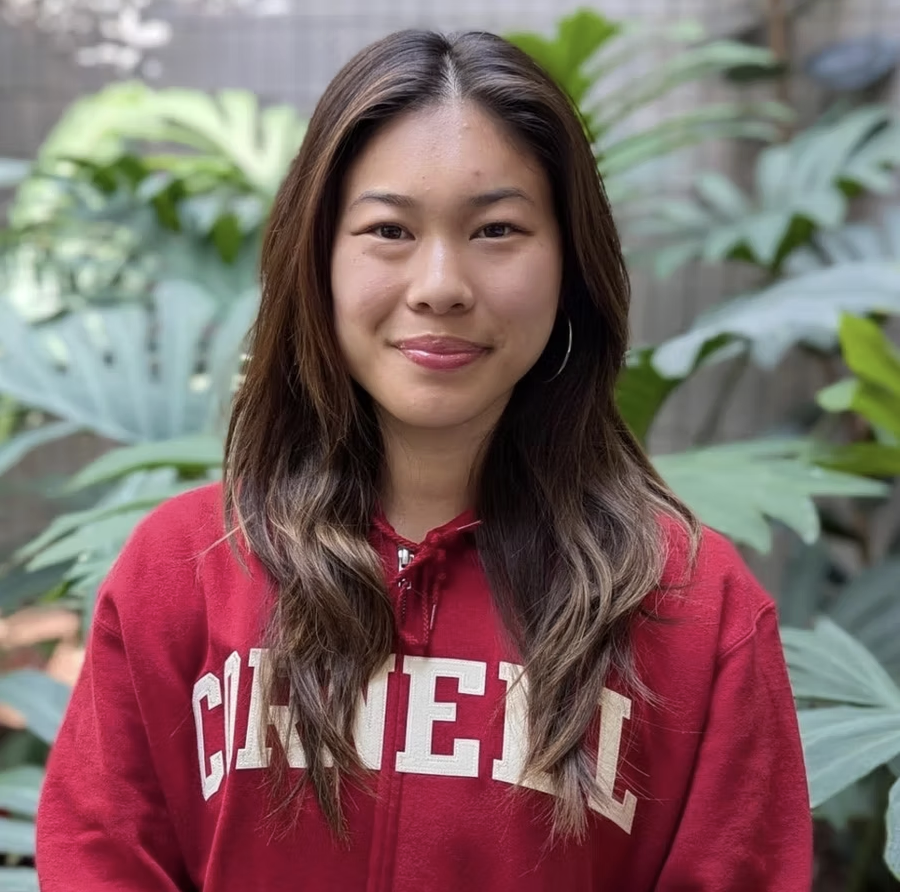
The Biotech Club recently hosted a discussion with Tian Yu, who shared her experiences from transitioning from academia to the biotechnology industry. Tian earned her Ph.D. in Cell and Molecular Biology and an MBA from the University of Nevada, Reno, and has spent over a decade working across research, startups, and government. She’s led assay development at Bioelectronica and served as Chief Scientific Officer and VP of Product Development at Truckee Applied Genomics. She now works as a Scientist with the U.S. Department of Commerce.
Drawing on her diverse background in research, startup environments, and patent examination, Tian offered valuable insights into how scientists can navigate career decisions, develop marketable skills, and understand the business side of science.
How did you transition from academia to industry?
Tian shared her experience transitioning from academia to a startup environment at Biotechronica, emphasizing the cultural and practical differences between the two. While Tian had prior industry exposure, she found the fast-paced nature of startups (where outputs are due weekly and long hours are common) to be a major adjustment.
Unlike academia, where exploration and learning are emphasized, startups tend to prioritize immediate results over professional development. She noted that this shift required adapting quickly, learning on the job, and maintaining focus under tight timelines. The smaller the company, Tian added, the more intense and hands-on the work becomes.
How can students build the skills to be competitive for industry roles?
As companies are offering less formal training, Tian highlighted the importance of hands-on experience and building a professional network. She noted that internships not only help students develop technical skills but also allow them to learn from others’ perspectives. Networking, she added, can open doors to new opportunities and career paths that students might not have discovered otherwise.
What’s the #1 Piece of Advice for Performing Competitive Analysis?
Competitive analysis involves researching and comparing your product/idea with others in the market to understand how it stands out. This includes what competitors are doing well, where they fall short, and where new opportunities might exist.
Tian talked about how important it is when conducting a competitive analysis, it’s essential to start with products that are already commercialized. These examples provide proof of what works and help set realistic benchmarks.
She also recommends studying technically similar products, such as those addressing the same or related problems, even if their solutions differ slightly. This approach helps identify gaps in the market and opportunities for innovation.
How should students think about research products and future products?
Tian encourages students to approach their research with both scientific curiosity and market awareness. Assuming their PI (principal investigator) supports independent research directions, she suggested exploring how a project could eventually translate into a marketable product.
To do this, Tian recommended keeping an eye on industry trends. Examining what’s currently popular, what topics are gaining attention, and what problems people are trying to solve. She suggests looking into NIH and NSF funding trends, as well as topics discussed at major conferences, since these often highlight areas that will be in demand over the next few years.
However, Tian also reminds students not to chase trends blindly, emphasizing that research is most rewarding and impactful when it aligns with their genuine interests.
How did your career goals lead you to pursue an MBA?
Tian explained that her decision to pursue an MBA stemmed from a desire to better understand the business and management side of running a lab. While working in a core facility, she realized operating a lab involves many of the same principles as running a business.
She initially began taking business courses to gain practical knowledge and soon discovered she was already halfway to completing the degree. Pursing the MBA allowed her to build skills she needed to manage lab operations effectively, which isn’t found in typical scientific training.
What does assay development look like? Are there standard steps?
Tian explained that assay development can take many forms depending on the organization and project goals. Typically, the process begins when management or market research identifies a business need or a market opportunity for a specific type of test. From there, the scientific team works to design an assay that fits that need by considering factors such as the sample type, intended use, and commercial potential.
Key steps in assay development often include proof of concept testing, assay validation (for example, determining the limit of detection), assessing inter-assay variability, and optimization to ensure the method is reliable and competitive. Teams may also compare their results to existing products to ensure the new assay is faster, more cost-effective, or otherwise advantageous, even if it isn’t completely novel.
Tian also noted that the experience differs between large companies and startups. In large organizations, scientists may see only a portion of the development process, while in startups, smaller teams often participate in the entire pipeline from initial concept to final validation.
What are the main roles of patent examiner? What does the examination process look like?
Tian explained that the primary role of a patent examiner is to review patent applications and determine whether an invention is patentable and valuable. Examiners act as both reviewers and judges, assessing the technical details and legal requirements of each proposal.
A single examiner often has significant authority in the process, as their evaluation can determine whether a patent is approved. One of the key aspects of examination is assessing novelty, which refers to whether the invention is truly new and demonstrates creativity beyond existing technologies.
The entire process can take several months, and it often takes around four months for applicants to receive a comprehensive response from the examiner.

Tian's Essay: Bridging the Gap Between Academia and Industry
Beyond her work in government and industry, Tian has also contributed to the broader scientific community by writing about career transitions. In her essay "Demystifying the Gap," published in ASBMB Today in August 2023, she tackled common misconceptions that prevent scientists from exploring industry careers.
Drawing from her experience as Chief Scientific Officer at Truckee Applied Genomics and her interactions with early career academics at the Experimental Biology conference, Tian identified a critical issue: many Ph.D. graduates assume academia is their only viable path, despite statistics showing most ultimately work in industry. She recognized that this gap between academia and industry creates fewer opportunities and resources for aspiring professionals.
The essay systematically debunks six major myths that discourage scientists from considering industry positions. Tian addresses concerns about publication opportunities, the misconception that leaving academia is a "point of no return," assumptions about meaningful work, work environment flexibility, postdoctoral requirements, and work visa limitations. For each myth, she provides concrete examples and current realities that challenge these outdated beliefs.
What makes Tian's perspective particularly valuable is her emphasis on the commonalities between both sectors. Rather than positioning industry and academia as opposing paths, she highlights how both require strong communication skills, problem-solving abilities, and critical thinking. She argues that the divide is not as wide as many believe and that understanding the unique strengths of each sector can help professionals make more informed career decisions.
The essay serves as an important resource for anyone navigating the transition from academic training to professional careers, offering reassurance that industry work can be just as fulfilling, impactful, and intellectually engaging as academic research.
If you'd like to read her full essay, you can check it out here: ASBMB Today - "Demystifying the Gap"



Comments